




















World Heritage Sites
designated by
UNESCO
the World Heritage Committee has inscribed 890 properties on the World Heritage List
The following are some I have visited:
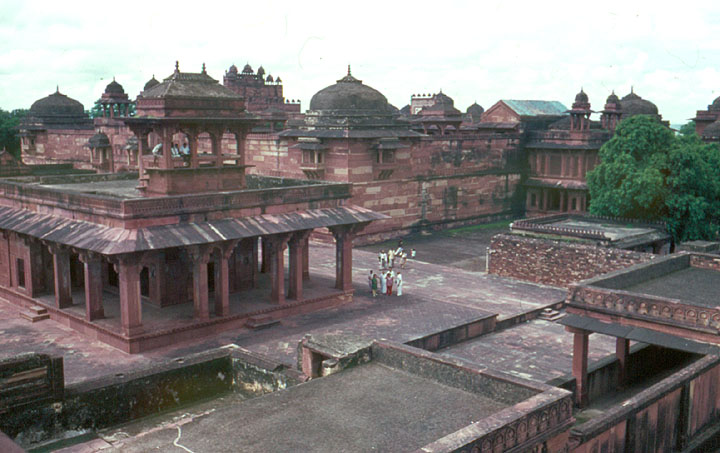
palace interior
Built during the second half of the
16th century by the Emperor Akbar, Fatehpur Sikri (the City of Victory) was the
capital of the Mughal Empire for only some 10 years. The complex of monuments
and temples, all in a uniform architectural style, includes one of the largest
mosques in India, the Jama Masjid.
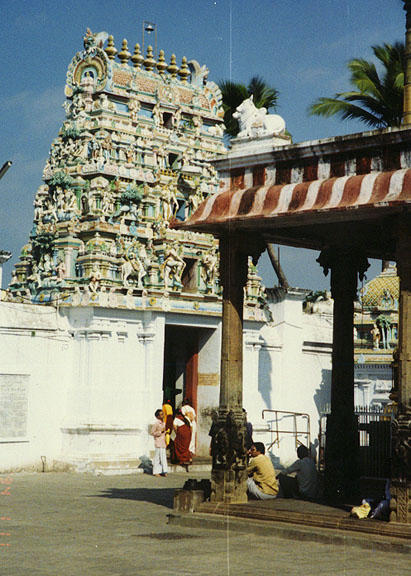
in the style of Southern India
Two great Chola Temples of the 11th
and 12th centuries have been added to the 11th century Brihadisvara temple of
Thanjavur, inscribed in 1987. The Great Living Chola Temples were built by kings
of the Chola Empire, which stretched over all of South India and the
neighbouring islands. The site now includes the three great 11th and 12th
century Chola Temples: the Brihadisvara temple of Thanjavur, the Temple of
Gangaikondacholisvaram and the Airavatesvara temple at Darasuram. The Temple of
Gangaikondacholisvaram, built by Rajendra I, was completed in 1035. Its 53-m
vimana (sanctum tower) has recessed corners and a graceful upward curving
movement, contrasting with the straight and severe tower at Thanjavur. It has
six pairs of massive, monolithic dvarapalas statues guarding the entrances and
bronzes of remarkable beauty inside. The Airavatesvara temple complex, built by
Rajaraja II, at Darasuram features a 24-m vimana and a stone image of Shiva. The
temples testify to the Cholas brilliant achievements in architecture, sculpture,
painting, and bronze casting.
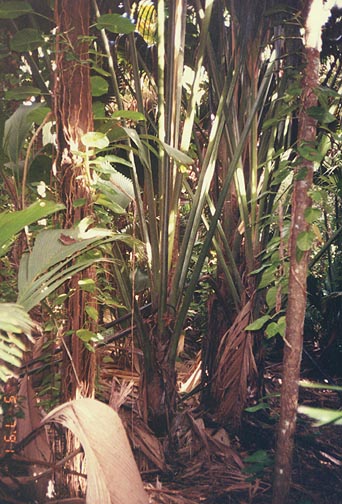
Valle e Mai
In the heart of the small island of Praslin, the reserve has the vestiges of a natural palm forest preserved in almost its original state. The famous coco de mer, from a palm-tree once believed to grow in the depths of the sea, is the largest seed in the plant kingdom.
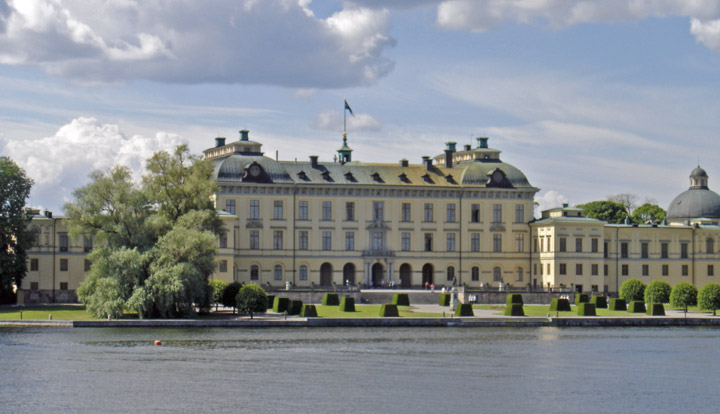
Drottningholm castle
residence of the Swedish monarchs
The Royal Domain of Drottningholm stands on an island in Lake Mälar in a suburb of Stockholm. With its castle, perfectly preserved theatre (built in 1766), Chinese pavilion and gardens, it is the finest example of an 18th-century north European royal residence inspired by the Palace of Versailles.
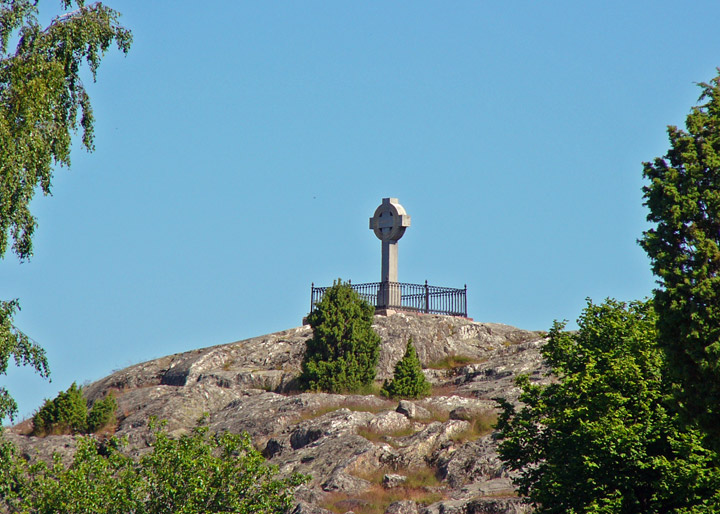
The Birka archaeological site is
located on Björkö Island in Lake Mälar and was occupied in the 9th and 10th
centuries. Hovgården is situated on the neighbouring island of Adelsö. Together,
they make up an archaeological complex which illustrates the elaborate trading
networks of Viking-Age Europe and their influence on the subsequent history of
Scandinavia. Birka was also important as the site of the
first Christian congregation in Sweden, founded in 831 by St Ansgar.
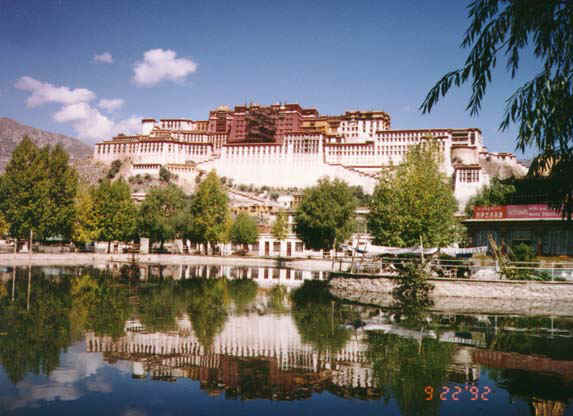
Potala Palace
The Potala Palace, winter palace of the Dalai Lama since the 7th century, symbolizes Tibetan Buddhism and its central role in the traditional administration of Tibet. The complex, comprising the White and Red Palaces with their ancillary buildings, is built on Red Mountain in the centre of Lhasa Valley, at an altitude of 3,700m. Also founded in the 7th century, the Jokhang Temple Monastery is an exceptional Buddhist religious complex. Norbulingka, the Dalai Lama's former summer palace, constructed in the 18th century, is a masterpiece of Tibetan art. The beauty and originality of the architecture of these three sites, their rich ornamentation and harmonious integration in a striking landscape, add to their historic and religious interest.
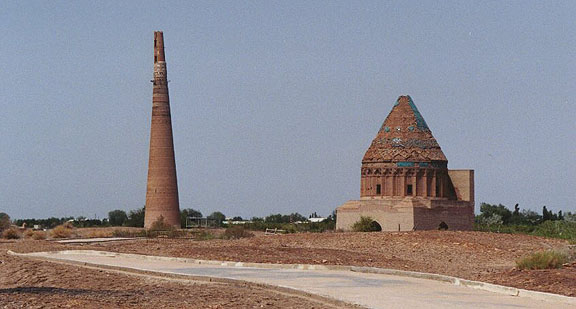
minaret (1320's)
Kunya-Urgench is situated in northwestern Turkmenistan, on the south side of the Amu Daria River. Urgench was the capital of the Khorezm region, part of the Achaemenid Empire. The old town contains a series of monuments mainly from the 11th to 16th centuries, including a mosque, the gates of a caravanserai, fortresses, mausoleums and a minaret. The monuments testify to outstanding achievements in architecture and craftsmanship whose influence reached Iran and Afghanistan, and later the architecture of the Mogul Empire of 16th-century India.
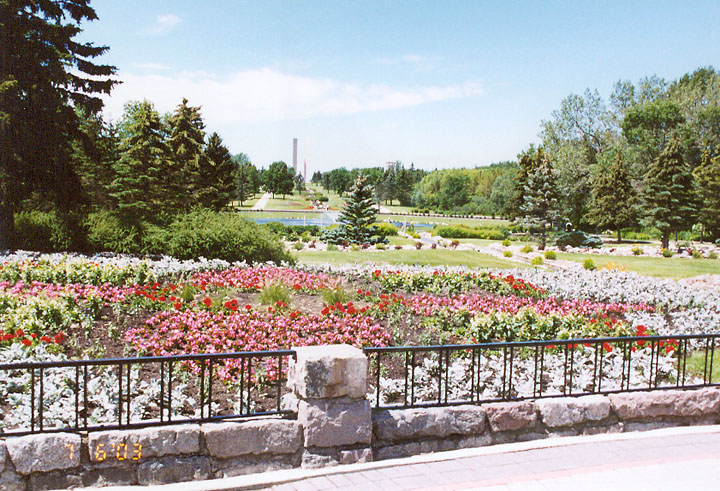
the gardens
In 1932 Waterton Lakes National Park (Alberta, Canada) was combined with the Glacier National Park (Montana, United States) to form the world's first International Peace Park. Situated on the border between the two countries and offering outstanding scenery, the park is exceptionally rich in plant and mammal species as well as prairie, forest, and alpine and glacial features.
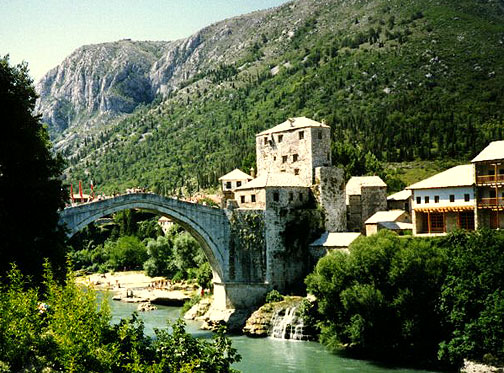
bridge in 1986
The historic town of Mostar, spanning
a deep valley of the Neretva River, developed in the 15th and 16th century as an
Ottoman frontier town and during the Austro-Hungarian period in the 19th and
20th centuries. Mostar has long been known for its old Turkish houses and Old
Bridge, Stari Most, after which it is named. In the 1990 conflict, however, most
of the historic town and the Old Bridge, designed by the renowned architect,
Sinan, were destroyed. The Old Bridge was recently rebuilt and many of the
edifices in the Old Town have been restored or rebuilt with the contribution of
an international scientific committee established by UNESCO. The Old Bridge
area, with its pre-Ottoman, eastern Ottoman, Mediterranean and western European
architectural features is an outstanding example of a multicultural urban
settlement. The reconstructed Old Bridge and Old City of Mostar is a symbol of
reconciliation, international cooperation and of the coexistence of diverse
cultural, ethnic and religious communities.
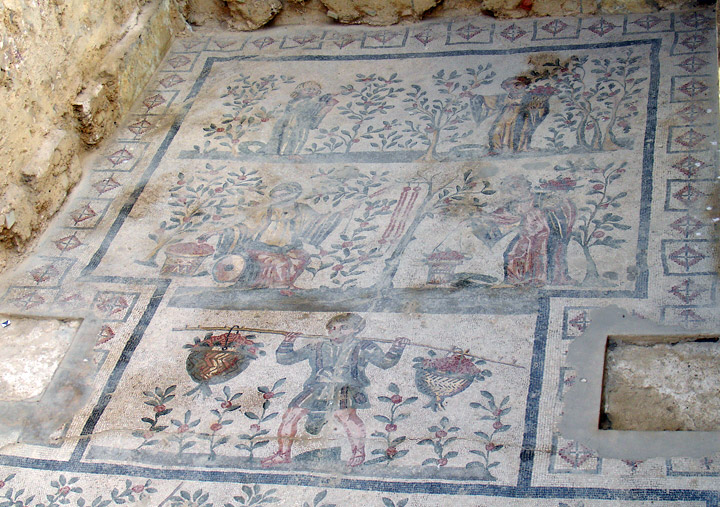
Roman mosaic (300 AD)
Roman exploitation of the countryside
is symbolized by the Villa Romana del Casale (in Sicily), the centre of the
large estate upon which the rural economy of the Western Empire was based. The
villa is one of the most luxurious of its kind. It is especially noteworthy for
the richness and quality of the mosaics which decorate almost every room; they
are the finest mosaics in situ anywhere in the Roman world.
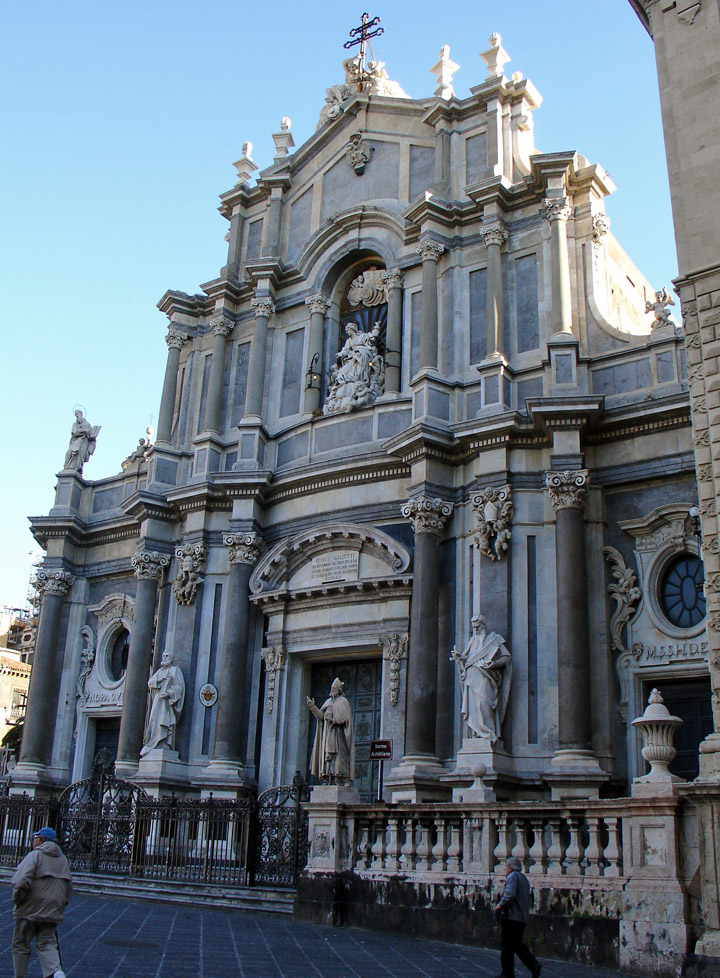
cathedral in Catania
The eight towns in south-eastern
Sicily: Caltagirone, Militello Val di Catania, Catania, Modica, Noto, Palazzolo,
Ragusa and Scicli, were all rebuilt after 1693 on or beside towns existing at
the time of the earthquake which took place in that year. They represent a
considerable collective undertaking, successfully carried out at a high level of
architectural and artistic achievement. Keeping within the late Baroque style of
the day, they also depict distinctive innovations in town planning and urban
building.
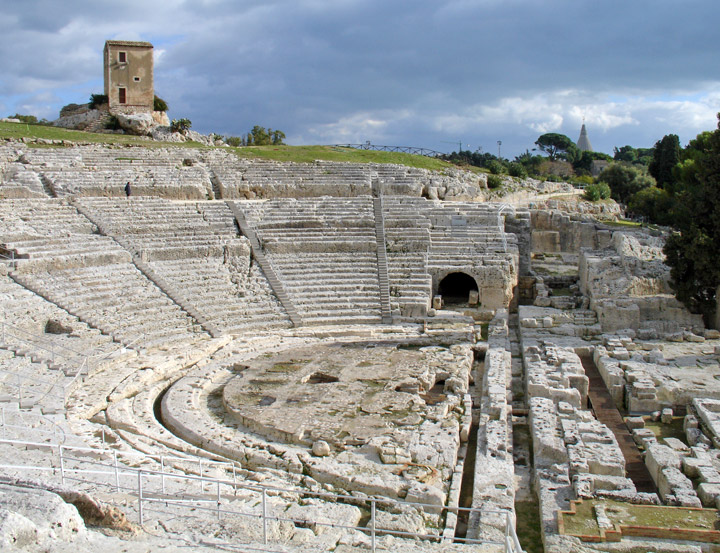
Greek theater in Syracuse, Sicily, Italy
The site consists of two separate elements, containing outstanding vestiges dating back to Greek and Roman times: The Necropolis of Pantalica contains over 5,000 tombs cut into the rock near open stone quarries, most of them dating from the 13th to 7th century B.C. Vestiges of the Byzantine era also remain in the area, notably the foundations of the Anaktoron (Prince's Palace). The other part of the property, Ancient Syracuse, includes the nucleus of the city’s foundation as Ortygia by Greeks from Corinth in the 8th century B.C. The site of the city, which Cicero described as “the greatest Greek city and the most beautiful of all”, retains vestiges such as the Temple of Athena (5th century B.C., later transformed to serve as a cathedral), a Greek theatre, a Roman amphitheatre, a fort and more. Many remains bear witness to the troubled history of Sicily, from the Byzantines to the Bourbons, with, in between, the Arabo-Muslims, the Normans, Frederick II (Hohenstaufen, 1197 to 1250 A.D.), the Aragons and the Kingdom of the Two Sicilies. Historic Syracuse offers a unique testimony to the development of Mediterranean civilization over three
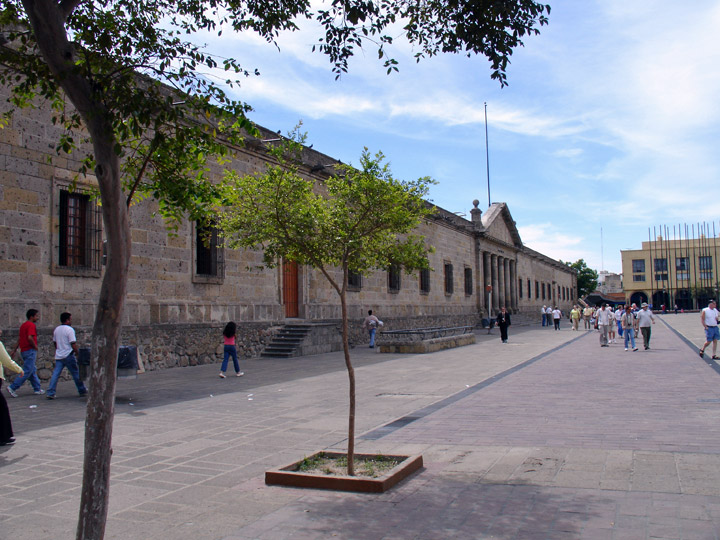
Hospicio Cabaňas
The Hospicio Cabañas was built at the beginning of the 19th century to provide care and shelter for the disadvantaged – orphans, old people, the handicapped and chronic invalids. This remarkable complex, which incorporates several unusual features designed specifically to meet the needs of its occupants, was unique for its time. It is also notable for the harmonious relationship between the open and built spaces, the simplicity of its design, and its size. In the early 20th century, the chapel was decorated with a superb series of murals, now considered some of the masterpieces of Mexican art. They are the work of José Clemente Orozco, one of the greatest Mexican muralists of the period.
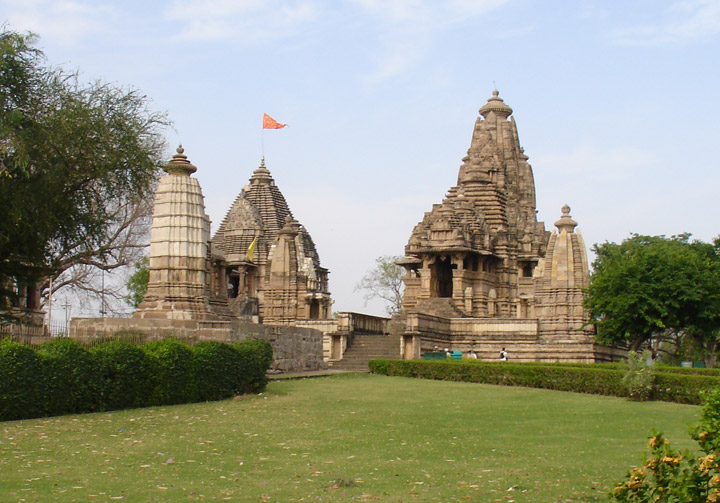
. The most important Khajurāho temples were built during the 11th century.
The temples at Khajuraho were built during the Chandella dynasty, which reached its apogee between 950 and 1050. Only about 20 temples remain; they fall into three distinct groups and belong to two different religions – Hinduism and Jainism. They strike a perfect balance between architecture and sculpture. The Temple of Kandariya is decorated with a profusion of sculptures that are among the greatest masterpieces of Indian art.
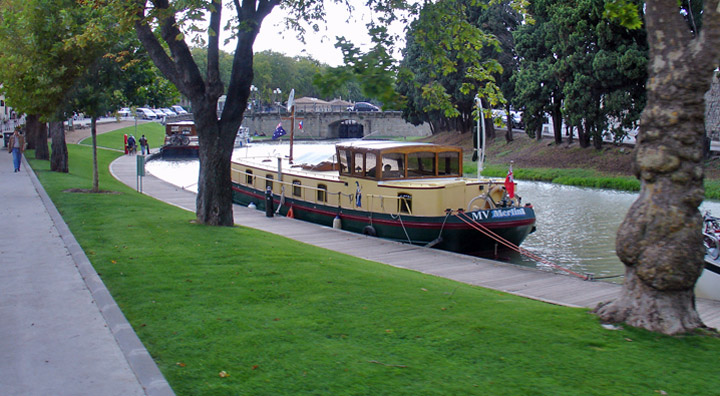
Canal du Midi
This 360-km network of navigable
waterways linking the Mediterranean and the Atlantic through 328 structures
(locks, aqueducts, bridges, tunnels, etc.) is one of the most remarkable feats
of civil engineering in modern times. Built between 1667 and 1694, it paved the
way for the Industrial Revolution. The care that its creator, Pierre-Paul Riquet,
took in the design and the way it blends with its surroundings turned a
technical achievement into a work of art.
As of 7/1/2010 I have visited and
taken photos of
301 of the 890 World Heritage Sites in 148 countries.